- +86 21 56076732
- rl@mdiecasting.com


Quick SummaryThis article explains three common dimensions used to describe roller chains: Pitch, Roller Diameter, and Inner Width. It also explains t...
A top roller conveyor chain is a specialized industrial conveyor chain designed with freely rotating rollers mounted above the chain. The chain transm...
IntroductionExtended pin conveyor chains are widely used in automated conveying systems where additional mounting points are required for fixtures, pa...
Roller chains are one of the most widely used mechanical components for power transmission and material handling systems. They are commonly found in i...
IntroductionIndustrial chains are widely used in lifting equipment, power transmission systems, and material handling applications. However, two types...
Industrial chains are widely used in lifting equipment, power transmission systems, and material handling applications. However, two types of chains are often confused by customers: Leaf Chains and Roller Chains.
Although both are made from steel plates and pins, they are designed for completely different working conditions.
Leaf chains are mainly used for lifting and pulling applications, while roller chains are designed for continuous power transmission.
Choosing the correct chain type is essential to ensure equipment safety, service life, and reliable operation.
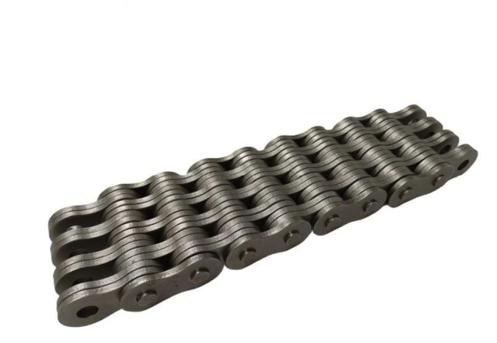
Leaf chain, also known as lifting chain, consists of:
·Multiple layers of steel plates
·Pins connecting the plates
Unlike roller chains, leaf chains do not contain rollers or bushings.
The flat plate structure provides excellent tensile strength and makes them suitable for vertical lifting and load-bearing applications.
Steel plates + Pins
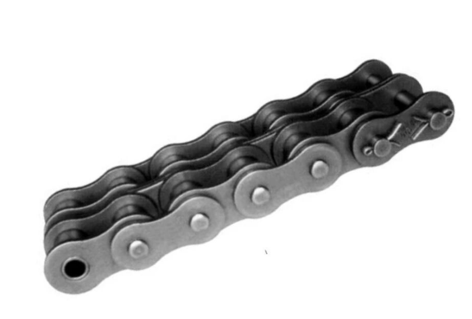
Roller chains consist of:
·Inner plates
·Outer plates
·Bushings
·Rollers
·Pins
The rollers engage with sprocket teeth, allowing smooth rotary movement and efficient power transmission.
Inner plates + Outer plates + Bushings + Rollers + Pins
The easiest way to distinguish them visually:
| Feature | Leaf Chain | Roller Chain |
|---|---|---|
| Appearance | Flat stacked steel plates | Visible cylindrical rollers |
| Rollers | No rollers | Equipped with rollers |
| Structure | Multiple plate layers connected by pins | Plates, bushings and rollers assembled together |
| Main Function | Lifting and pulling | Power transmission |
The primary purpose of leaf chains is to handle tensile loads.
Common applications include:
·Forklift mast systems
·Lifting platforms
·Cranes
·Material handling equipment
·Hoisting mechanisms
Leaf chains provide:
✓ High tensile strength
✓ Compact structure
✓ Reliable lifting performance
However, leaf chains are not designed for continuous sprocket-driven transmission.
Roller chains are widely used for transmitting mechanical power.
They work together with sprockets to transfer torque and allow continuous operation.
Common applications include:
·Industrial machinery
·Conveyor systems
·Agricultural equipment
·Textile machinery
·Production line drives
Advantages:
✓ Smooth operation
✓ Good wear resistance
✓ Suitable for continuous running
✓ High transmission efficiency
Typical production process:
1.Steel plate cutting and punching
2.Heat treatment
3.Plate stacking and assembly
4.Pin riveting
Because leaf chains do not include rollers or bushings, their structure is relatively simple but requires precise plate processing and assembly.
Typical production process:
1.Inner and outer plate stamping
2.Bushing and roller manufacturing
3.Heat treatment
4.Assembly and riveting
Roller chains require more components and manufacturing steps, but their mature production technology provides excellent performance for high-volume applications.
Leaf chain sizes are usually based on roller chain pitch standards.
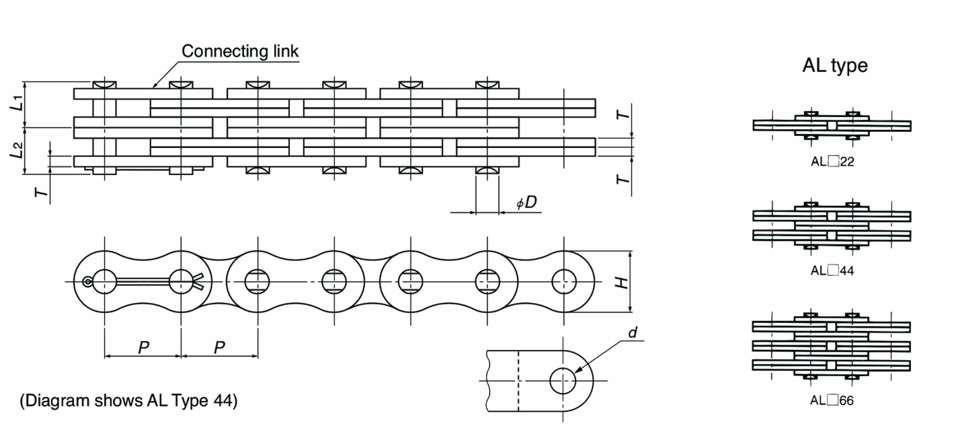
Common standards include:
·ANSI
·ISO 4347
·GB/T 6074
Common leaf chain models:
| Model | Pitch | Typical Application |
|---|---|---|
| AL4 / BL4 | 12.70 mm | Small lifting equipment |
| AL6 / BL6 | 19.05 mm | Medium forklift systems |
| AL8 / BL8 | 25.40 mm | Common forklift applications |
| AL10 / BL10 | 31.75 mm | Heavy-duty lifting equipment |
| AL12 / BL12 | 38.10 mm | Large lifting systems |
| AL16 / BL16 | 50.80 mm | Heavy load applications |
Example:
BL844
Meaning:
BL = Heavy Duty Leaf Chain
8 = 1 inch pitch (25.4mm)
4×4 = Plate arrangement
| Performance | Leaf Chain | Roller Chain |
|---|---|---|
| Main Function | Lifting / pulling | Power transmission |
| Load Type | Static or reciprocating load | Continuous rotating load |
| Tensile Strength | Excellent | Good |
| Running Speed | Low speed | Medium/high speed |
| Sprocket Engagement | Not suitable | Designed for sprockets |
| Wear Resistance | Moderate | Excellent with proper lubrication |
Before selecting a leaf chain, customers should confirm:
Example:
AL series
BL series
Common configurations:
2×2
2×3
3×4
4×4
4×6
Please confirm:
Total chain length
Number of chain links
Installation requirements
Leaf chains and roller chains serve different purposes.
✓ The application requires lifting, pulling, or load holding
✓ High tensile strength is required
✓ The chain works in vertical lifting systems
✓ Continuous power transmission is required
✓ The chain runs with sprockets
✓ The equipment requires efficient mechanical drive
Selecting the correct chain type helps improve equipment safety, reduce maintenance costs, and extend service life.